NOMAD WELLNESS NISEKO | 070 9090 8183 | info@nomadwellnessniseko.com
Understanding Concussions: Why Prevention Matters on the Slopes

Concussions represent one of the most common yet frequently misunderstood injuries in winter sports. As a physiotherapy and wellness clinic in one of Japan’s leading skiing / snowboarding destinations – we are dedicated to keeping adventurers healthy on Niseko’s legendary powder, we believe education is the first step toward prevention and proper recovery.
What Exactly Is a Concussion?
A concussion is a mild traumatic brain injury that occurs when the brain moves rapidly inside the skull following an impact or sudden momentum change. Unlike the more visible injuries we commonly treat at Nomad Wellness, such as ACL tears or wrist sprains, concussions can be subtle yet potentially serious.
I’ve witnessed firsthand how concussions can derail not just a ski holiday but weeks or months of someone’s life. The brain doesn’t display immediate swelling or bruising that you can see, but the functional disruption can be significant.
The Science Behind Brain Trauma
When your head experiences a sudden impact or change in direction—whether from catching an edge, colliding with another skier, or hitting a tree—your brain essentially sloshes against the inside of your skull. This movement stretches and damages neural tissue, disrupting normal brain function.
Research published in the Journal of Neurotrauma shows that even seemingly minor impacts can cause complex neurometabolic cascades that affect brain cell function. The latest studies indicate that recovery timelines are highly individual and may take significantly longer than previously thought.
Recognizing the Warning Signs
Concussion symptoms can be subtle and may not appear immediately after injury.
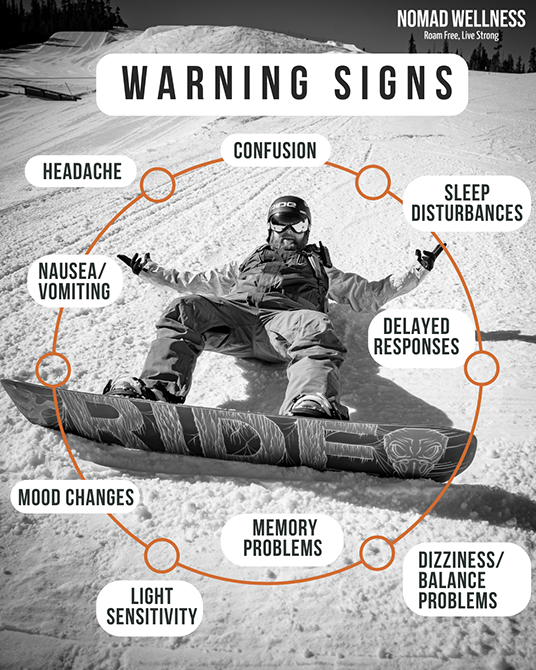
What makes concussions particularly challenging is that symptoms often evolve over hours or days. That epic wipeout you laughed off in the morning might leave you feeling disoriented and nauseated by dinner.
The Unique Risks in Niseko’s Environment
Niseko’s famous powder creates both protection and peril when it comes to head injuries. While deep snow can cushion falls, it also creates:
- False confidence: The soft landing may encourage more aggressive riding beyond skill levels
- Tree well dangers: Falling head-first near trees presents suffocation and impact risks
- Limited visibility days: When visibility drops in storms, collision risks increase dramatically
- Terrain trap consequences: Gullies and depressions can increase impact force when falls occur
The Myth of Complete Helmet Protection
Like many at Nomad Wellness, I’m a strong advocate for helmet use. However, it’s crucial to understand their limitations. Helmets excel at preventing skull fractures and severe traumatic brain injuries but cannot completely eliminate concussion risk.
This is because concussions result from the brain moving within the cerebrospinal fluid inside the skull—something no helmet can fully prevent. A 2019 study in the British Journal of Sports Medicine found that while helmets reduced severe head trauma by up to 60%, concussion rates remained significant among helmeted skiers and snowboarders.
The Dangerous Cascade of Successive Concussions
Perhaps the most concerning aspect of concussions is how one injury increases vulnerability to subsequent ones. Second Impact Syndrome—when a second concussion occurs before the first has healed—can cause catastrophic brain swelling and is potentially fatal.
Even without this severe outcome, research shows that each concussion can compound symptoms and extend recovery time. This is why the “pushing through it” mentality can be particularly dangerous with head injuries and is not advised.
Recovery Protocol: The NOMAD Approach
At Nomad Wellness, we advocate for a comprehensive, phased recovery approach:
Phase 1: Acute Management (24-48 hours)
- Physical and cognitive rest
- Limited screen time and mental stimulation
- Adequate hydration and quality sleep
- Monitoring for worsening symptoms
Phase 2: Gradual Reintroduction (Days 3-7)
- Light, non-jarring physical activity (slow walking)
- Gradual return to normal daily activities
- Continued avoidance of alcohol and excessive stimulation
- Regular symptom monitoring
Phase 3: Progressive Return (Days 8-14+)
- Structured increase in physical exertion
- Controlled cognitive challenges
- Professional reassessment before return to snow sports
- Customized strengthening to address any balance or coordination deficits
We can facilitate this recovery with our home visit services, ensuring you receive proper care even if getting to our clinic is challenging.
Prevention Strategies for Winter Sports Enthusiasts
While no strategy can eliminate all concussion risks, these approaches significantly reduce your vulnerability:
- Honest skill assessment: Ride terrain appropriate to your ability level
- Proper equipment: Well-fitted helmets and protective gear
- Core strength: A strong core helps maintain body control during falls
- Neck strengthening: Stronger neck muscles can reduce brain movement during impacts
- Situational awareness: Being mindful of changing conditions, other riders, and terrain features
- Rest when needed: Fatigue increases injury risk substantially
- Progressive skill building: Work with instructors to safely advance your abilities
When to Seek Professional Help
If you experience a head impact while skiing or snowboarding in Niseko, our team at Nomad Wellness recommends immediate assessment if any of these occur:
- Loss of consciousness, even briefly
- Confusion or disorientation
- Persistent or worsening headache
- Vomiting
- Increased drowsiness
- Memory problems
- Unusual behavior changes
With same-day appointments and our complimentary pick-up service within Hirafu, we’re equipped to provide prompt evaluation and guidance.
Conclusion: Respecting Your Brain’s Recovery Timeline
The brain is remarkably resilient but requires proper time and care to heal. In my years working with athletes and adventurers, I’ve seen how respecting recovery protocols leads to better long-term outcomes and prevents the frustrating cycle of repeated injuries.
Remember that while powder days come and go, your brain function affects every aspect of your life. At Nomad Wellness Niseko, we’re committed to helping you enjoy many future seasons on the mountain by protecting what matters most.
Whether you need guidance on concussion prevention, assessment following a fall, or support during recovery, our international sports therapists are here to help you navigate the journey back to the slopes safely.
Have you experienced a concussion while participating in winter sports? We’d love to hear your story and recovery journey in the comments below.
Roam Free, Live Strong
 English
  Chinese